The Medical Officer of Health is issuing a Heat Advisory for July 22-23, 2012 as it is forecast that the Humidex will be greater than 36. For tips on staying cool in Ottawa, Beat the Heat This Summer. read more..
Monday, 23 July 2012
Medical Officer Of Health-Heat Advisory
Thursday, 19 July 2012
Beach Volleyball Tournament-30Th Anniversary-Ottawa
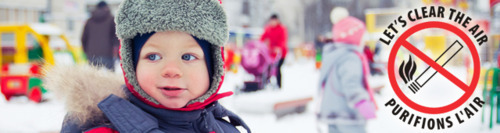
On Saturday July 14th, Ottawa’s Mooney’s Bay was the site of The HOPE Volleyball SummerFest - North America’s largest outdoor one-day beach volleyball tournament. This year was the 30th anniversary of an event that is all about giving back to the community by raising funds for charities in and around Ottawa. Attendees enjoyed a fantastic day of volleyball and live music all the while contributing to a great cause on this smoke-free site. Ottawa’s new smoke-free regulations now prohibits smoking on beaches such as Mooney’s Bay, in addition to parks, playgrounds, sports fields, ByWard and Parkdale Market stands and outdoor restaurant and bar patios and terraces. As of July 2nd, people smoking on these properties will be subject to receiving a ticket. Here is what a few festival participants had to say about the HOPE event and beaches being smoke-free: http://www.youtube.com/watch?v=io5zDW_0ihI To learn more about Ottawa’s new smoke-free regulations, or if you need help quitting smoking, please visit ottawa.ca/smokefree or call Ottawa Public Health Information 613-580-6744 (TTY: 613-580-9656). You can also connect with OPH on Facebook and Twitter (@ottawahealth). read more..
Friday, 13 July 2012
Medical Officer Of Health-Heat Advisory
The Medical Officer of Health is issuing a Heat Advisory until further notice as it is forecast that the Humidex will be greater than 36 for the next several days. This Heat Advisory goes out to our community partners who distribute information on hot weather precautions. See some tips on staying cool in the heat. read more..
Friday, 6 July 2012
Medical Officer Of Health-Ottawa Public Library-Environment Canada-Consecutive Days
The Medical Officer of Health is issuing a Heat Warning for July 6 and 7. A heat warning is declared when Environment Canada forecasts a humidex of 40 or hotter for at least two consecutive days. It is important to know that extreme heat can cause dehydration, heat exhaustion, heat stroke and even death.Infants, young children and the homeless are also at greater risk from extreme heat, along with people taking medications like anti-Parkinsons and antidepressants. OPH is encouraging people to check on family, friends and neighbours who may be isolated or vulnerable to the heat and need help accessing places to cool down.To avoid heat-related illnesses, residents and visitors should:
- Drink plenty of fluids, preferably water and avoid caffeine and alcohol
- Avoid strenuous physical activity outdoors
- Avoid direct exposure to the sun and seek shade and shelter at the first signs of heat exposure
- Wear lightweight and loose clothing
- Spend at least two hours a day in an air-conditioned location, including shopping malls, local libraries or neighbourhood community centres
- Never leave children, the elderly or pets unattended in a car, even with the windows partly rolled down
- People with breathing and heart problems and parents and caregivers of children should pay attention to the hourly Air Quality Health Index available at airhealth.ca or at 1-866-688-3810.
- Check the forecasted UV index daily at theweathernetwork.com, local newspaper, television or radio. Choose a sunscreen and lip balm with a sun protection factor (SPF) of 30 or higher.
- Heat Advisory (humidex of 36 or more for a least two consecutive days)
- Heat Warning (humidex of 40 or more for at least two consecutive days)
- Heat Emergency (humidex of 45 or more for at least two consecutive days or situational factors)
- Smog Advisory (based on air quality index (AQI) of > 50)
- UV Index Warning ( UV index of 10 or higher)
Saturday, 9 June 2012
United Nations Special Rapporteur On The Right To Food-Food Insecurity-Healthy Eating
Dr. Rosamund Lewis on Food Insecurity in OttawaDr. Rosamund Lewis, Ottawa’s Associate Medical Officer of Health recently interviewed on CBC discussing food security in Ottawa, in response to Olivier De Schutter, United Nations Special Rapporteur on the Right to Food, who recently conducted an 11-day investigation of food security in the nation. Dr. Lewis said that, indeed, access to food in Ottawa remains a problem for many: 45,000 people in Ottawa access foodbanks regularly, a third of which are children, and this rate has worsened over the past five years. Financial inequity is not the only barrier contributing to food insecurity: physical access to fresh food as well as the “fast food society”, as Dr. Lewis calls it, are other causes of food insecurity in Ottawa. Food insecurity is a key topic in Ottawa’s Healthy Eating, Active Living Strategy which seeks to address both citizens of Ottawa at large and vulnerable populations, regarding healthy eating. The strategy takes a “lifecycle perspective”, for example, starting with breastfeeding. For more information, see the on the Health Eating, Active Living Report. read more..
Thursday, 24 May 2012
Adult Mental Health-Adolescence-Childhood
70% of adult mental health problems and illnesses onset occurs in childhood or adolescence. Services to help: read more..
Ottawa Public Library-Physical Activity-Steps Per Day-Councillor-Pedometer
Every day, beginning with our first steps as a child, we walk. But do you know that for adults ages 18 to 64 it is recommended that you reach 10,000 steps per day? Ottawa Public Health (OPH) and the Ottawa Public Library (OPL) invite you to use a pedometer to track your steps!To mark the end of Physical Activity Month, OPH staff, Board of Health members Katherine Hobbs and Mathieu Fleury, and Councillors and OPL Board trustees Jan Harder and Shad Qadri are wearing pedometers all week. They will be tweeting their step counts and trying to reach the 10,000 a day goal. Follow #ottawawalks and #ottawamarche to see how they’re doing!Walking is a free, accessible and low impact form of physical activity that can be incorporated throughout the day. To increase your daily steps:
- Walk to work or school
- Use the stairs instead of the elevator
- Take a lunch time walk
- Walk to the movies or local grocery store
- Children (5 to 11 years): 12,000 to 16,000 steps per day
- Youth (12 to 17 years): 11,000 to 12,000 steps per day
- Adults (18 to 64 years): 10,000 steps per day
- Older adults (65+): 6,000 to 7,000 steps per day
Tuesday, 8 May 2012
Public Health Nurse-Cfra
Ottawa Public Health Nurse Cristina speaks with CFRA about Mental Health Resiliency in children and youth read more..
Support Children-Mental Health-Hip Openers
Sunday, May 6, support children’s mental health and take part in “Walk so Kids can Talk.” Learn how you can get involved read more..
I recently hurt/pulled the front of my hip while exercising and was wondering if you could suggest some yoga poses that could possibly help stretch it! :))
Certainly! How’s this? (: Hip Openers. Some of those hip stretches should stretch the front of them as well. If you need/want more, let me know! read more..
Monday, 30 April 2012
Child Development
Parents want the best for their children! They work very hard to coax a baby’s first smile, steps and words. But parents often worry about:
- When children should master each skill
- How to help their child learn tasks and skills
- A checklist of skills most children can do at each age
- Tips on what to do to help children learn
- Ordering copies at www.ndds.ca
- Registering at 222.endds.com/en/index.html to receive the tool by email
- Calling the Ottawa Public Health Information Line at 613-580-6744
Public Opinion Research-Community Engagement-Public Consultation-Advocacy Strategy
This report outlines a proposal for a Renewed Strategy for a Smoke-Free Ottawa, designed to protect children and non-smokers from second-hand smoke (SHS) and to reduce tobacco use. The proposed strategy includes a significant increase in programming for people who want to quit; new smoke-free regulations to protect people from SHS and a public awareness, community engagement and advocacy strategy designed to make Ottawa a healthier city for all. OPH is recommending to the Ottawa Board of Health (BOH), the Community and Protective Services Committee (CPSC) and City Council that existing smoke-free regulations be amended, beginning this year, to prohibit smoking on: · All municipal properties, including parks, playgrounds, beaches, sports fields, fruit and vegetable markets and outdoor areas around City facilities; and · Outdoor restaurant and bar patios and terraces. These initiatives have been developed after extensive public consultation and research and do not require additional funding to enforce or to deliver enhanced services. OPH’s consultations and public opinion research indicate that Ottawa residents strongly support creating more smoke-free spaces. If the recommendations in this report are adopted by Council, Ottawa will join a growing number of municipalities that have made such places smoke-free. SHS is a known health hazard and studies have found that it can be as toxic outdoors as indoors (1-12). Sadly, every year 1,000 smokers and non-smokers in Ottawa die prematurely of tobacco related illness (13). Smoking and SHS has a financial cost as well, including $2 billion in direct health care costs to the Ontario economy (14). For Ottawa residents, hospitalization costs alone due to smoking-related illnesses are almost $40 million per year (13). The purpose of the proposed regulatory amendments is to reduce public exposure to SHS and the resulting risk of tobacco related chronic illness. The proposed amendments are part of an overall OPH strategy to protect children and non-smokers from SHS exposure, reduce smoking rates, increase tobacco cessation attempts, reduce tobacco use initiation, and improve health outcomes such as reducing heart attacks, respiratory illness and cancer. The regulations would complement community engagement activities that will advance smoke-free policies in settings such as hospitals and post-secondary campuses, doorways, hotels, motels and bed and breakfast establishments, spectator events, multiple unit dwellings, and outdoor worksites such as construction sites. A phased-in approach for enforcement of the regulatory amendments is recommended. Beginning with awareness raising and warnings, fines would not be levied until three months after the amendments take effect. It is anticipated that there would be a high degree of voluntary compliance and, as a result enforcement is recommended to be predominantly complaint-driven and would not require additional by-law staff or other resources. Enforcement would be accompanied by a parallel strategy that includes a public awareness campaign to inform the public of the regulatory changes and to increase awareness of the health risks of tobacco smoke and the dangers of water-pipe use.Full Report here read more..